OpenClaw Proved AI Agents Should Work For You — Cook.ai Made It One Click
OpenClaw showed the world what a proactive AI agent looks like. Cook.ai's Missions system takes that concept and gives every business owner a fleet of autonomous AI workers — no code, no terminal, no setup.
In late January 2026, an Austrian developer named Peter Steinberger released a project that broke the internet.
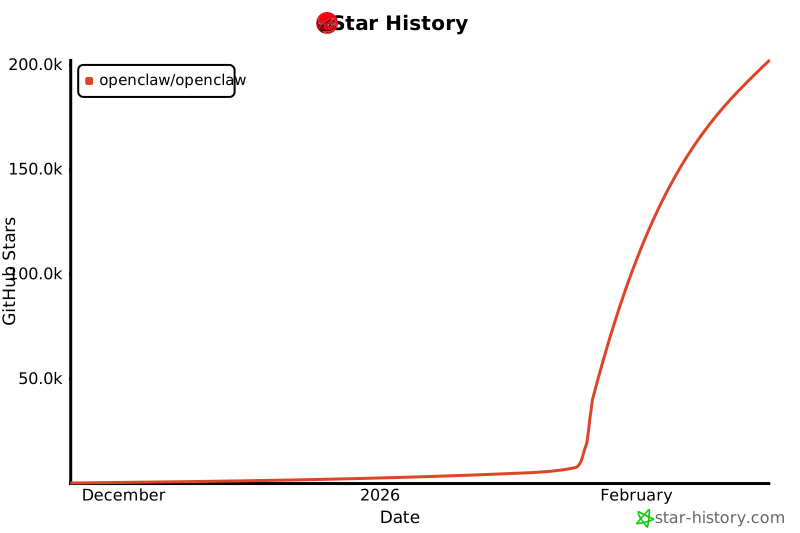
OpenClaw — an open-source AI agent — hit 100,000 GitHub stars in roughly two days. The fastest any repository has ever reached that milestone. By February, it crossed 145,000 stars with over 770,000 active agent instances running worldwide.
Sam Altman hired Steinberger on the spot, calling him "a genius with a lot of amazing ideas about the future of very smart agents interacting with each other to do very useful things for people."
The tech world lost its mind. And for good reason.
OpenClaw didn't just prove that AI agents are cool. It proved something far more important:
AI should work for you — not wait on you.
The Shift: From Reactive to Proactive
Every AI tool you've used — ChatGPT, Gemini, Claude — works the same way. You type a prompt. It responds. You type another prompt. It responds again. It's a conversation. A back-and-forth.
OpenClaw broke that model.
Instead of sitting in a chat window waiting for your next message, OpenClaw wakes itself up. It checks your inbox. It scans your calendar. It monitors your projects. It runs tasks on a schedule. It decides what's worth telling you about and what isn't.
Steinberger calls this the difference between a tool and a worker.
A tool sits on a shelf until you pick it up. A worker shows up in the morning, checks the task board, and gets to work.
OpenClaw introduced two systems that make this possible:
- Heartbeats: The agent wakes up at regular intervals (every 30 minutes by default) and exercises judgment — checking if action is needed, not blindly executing.
- Cron Jobs: Scheduled tasks that run at exact times regardless of what else the agent is doing.
This is the paradigm shift. Your AI isn't a chatbot anymore. It's an employee.
The Problem: OpenClaw Is Built for Engineers
Here's the catch.
OpenClaw is a developer tool. A powerful one. But to use it, you need:
- A terminal and command-line fluency
- Node.js 22+ installed on your machine
- Self-hosted infrastructure (your Mac, a Linux server, or a VPS)
- API keys from your LLM provider
- Configuration files, workspace setups, and plugin management
- Knowledge of Docker for sandboxing and security
Steinberger himself said his goal was to "build an agent that even my mum can use." The vision is there. But the reality is that OpenClaw today is a power tool for power users.
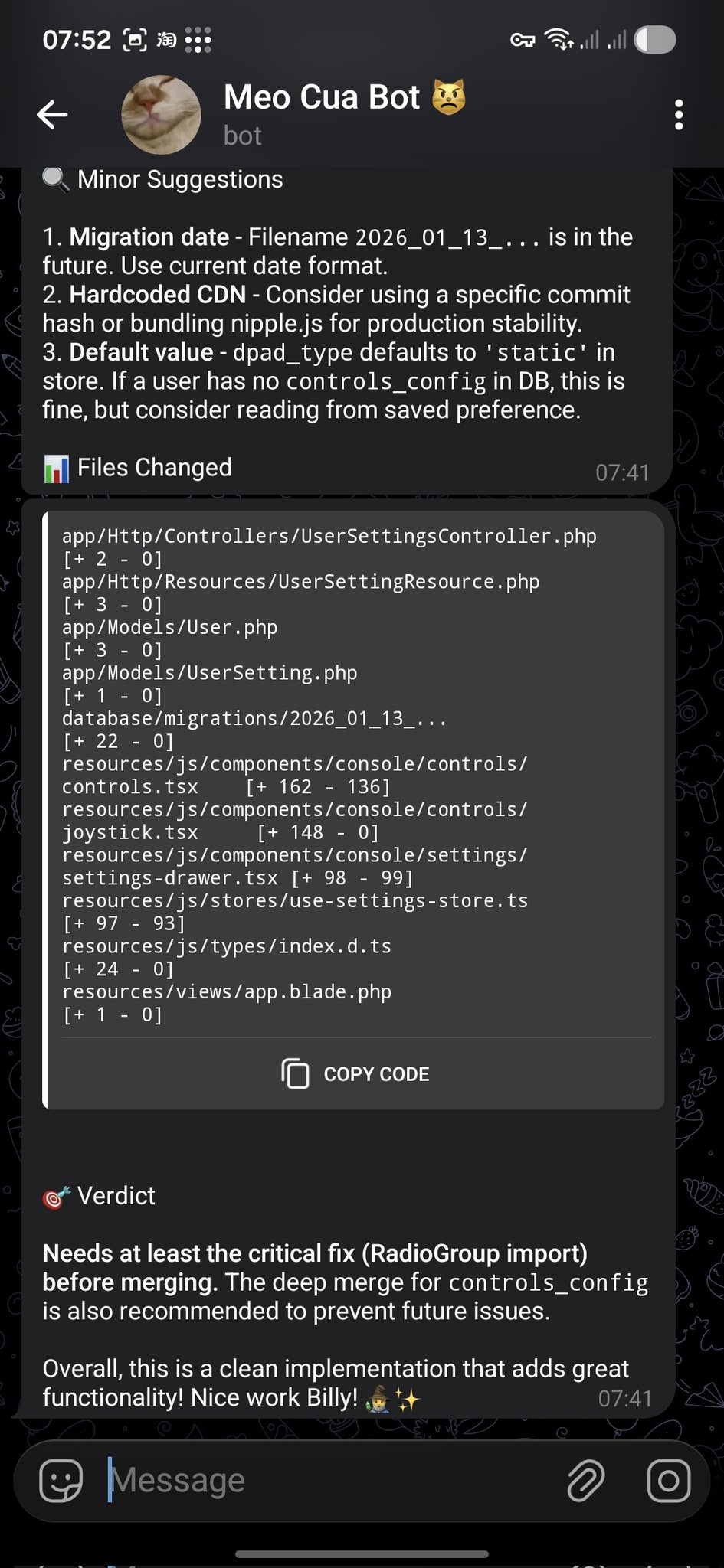
CrowdStrike, Kaspersky, and multiple security firms published advisories about misconfigured instances sitting open on the internet. Gary Marcus called it "far too dangerous for general public use."
This isn't a criticism of OpenClaw. It's an acknowledgment of where it sits in the maturity curve. Every transformative technology starts with the builders before it reaches the business owners.
The question is: who makes the leap from "developer tool" to "business infrastructure"?
Enter Cook.ai Missions: Your Own Fleet of AI Agents
This is what we built at Cook.ai.
While the developer world was falling in love with OpenClaw's single-agent model, we were asking a different question:
What if every business owner could launch multiple autonomous AI agents with a single click — no terminal, no code, no servers?
That's Missions.
How It Works
-
Describe what you want. Open the Missions page and type what you need accomplished — "Research my top 5 competitors and create a comparison report" or "Write a 30-day content calendar for my coaching business."
-
AI plans the mission. Our Mission Planner agent breaks your request into structured objectives with priorities, acceptance criteria, and a completion strategy. You review the plan and approve it.
-
Click launch. One button. The mission starts running autonomously in the background. You can close your browser. Go to lunch. Work on something else.
-
Watch it work. Each objective has a progress timeline. You can see reasoning traces, tool calls, and outputs in real time. When the agent completes an objective, it moves to the next one.
-
Get deliverables. Missions produce artifacts — documents, analyses, reports, data, images, code. They land in your workspace, ready to use.
Not One Agent. A Fleet.
This is where Cook.ai diverges from the OpenClaw model entirely.
OpenClaw is designed around a single agent per user. One assistant that handles everything you throw at it.
Cook.ai Missions lets you run many agents simultaneously. Each mission is independent:
- A research mission monitoring your competitors daily
- A content mission generating social media posts every week
- A campaign mission planning your next product launch
- An audit mission reviewing your sales pipeline
They all run in parallel. They all produce deliverables. They all track their own progress.
And they scale up and down based on your workload. Busy launch week? Spin up five missions. Quiet month? Let them run on schedule or pause them entirely.
The Architecture (Without the Terminal)
Under the hood, Cook.ai Missions shares conceptual DNA with OpenClaw's architecture — but wraps it in a managed platform.
| Concept | OpenClaw | Cook.ai Missions |
|---|---|---|
| Agent loop | Local Node.js runtime | Cloud-hosted execution (Fly.io / Cloud Run) |
| Skills/Playbooks | skills/ directory with SKILL.md files | Skills sidebar — teach agents SOPs visually |
| Proactive execution | Heartbeat + Cron | Recurring missions (daily/weekly) with timezone support |
| Memory | SQLite + vector embeddings locally | Workspace context index + vector search |
| Objectives | N/A (free-form) | Structured objectives with priority, acceptance criteria, completion checkers |
| Security | Docker sandboxing (self-managed) | Approval system — agents request permission for sensitive actions |
| Artifacts | File system output | Managed artifacts with RAG embeddings for search |
| Setup | Terminal, Node.js, API keys, config files | Type a sentence, click a button |
The key difference isn't technical sophistication. Both systems are powerful. The difference is who can use them.
OpenClaw requires a developer. Cook.ai Missions requires a business owner with an idea.
Skills: Teaching Your Agents How to Work
OpenClaw popularized the concept of "AgentSkills" — structured playbooks stored as markdown files that teach the agent how to combine its tools to accomplish specific tasks. Their community registry, ClawHub, has over 5,700 community-built skills.
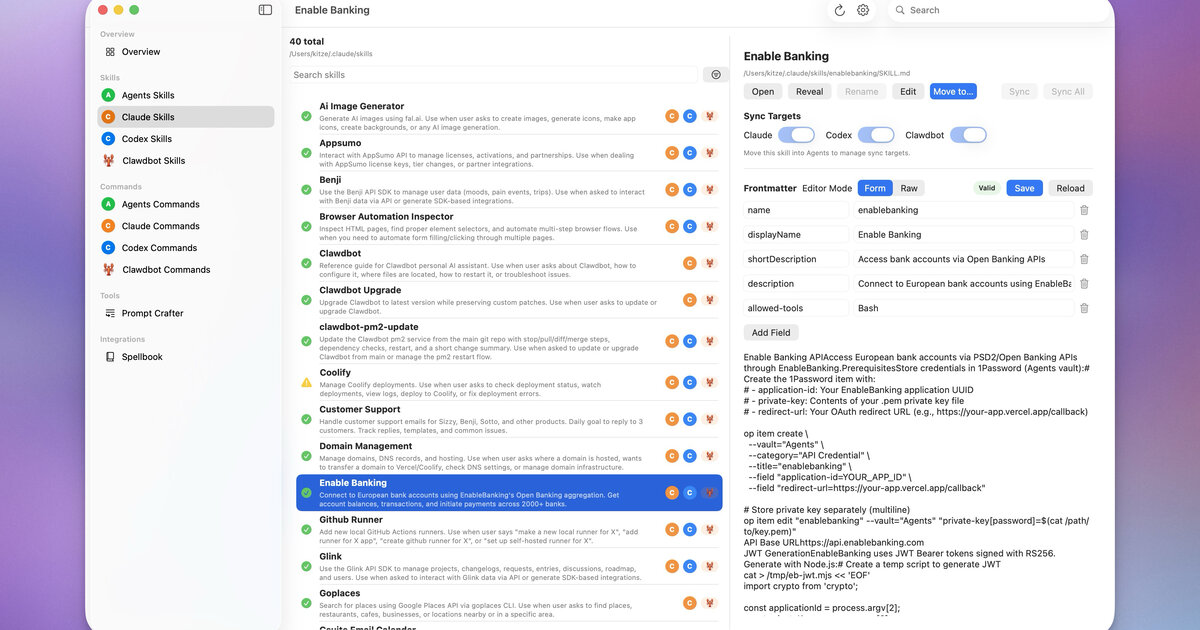
Cook.ai has the same concept built directly into the Missions interface.
From the Skills sidebar, you can teach your AI agents your standard operating procedures. Your ad creative process. Your client onboarding checklist. Your research methodology.
These aren't just prompts. They're reusable, structured knowledge that gets injected into the right mission at the right time. When you launch a content mission, it pulls your content strategy skills. When you launch a research mission, it uses your research frameworks.
Your AI agents learn how your business works.
Recurring Missions: The Heartbeat for Business
OpenClaw's heartbeat system — where the agent wakes itself up and exercises judgment — is genuinely brilliant. Cook.ai Missions implements the same concept for business workflows.
Set a mission to run daily at 8:00 AM and it becomes your morning briefing agent. Set it to weekly on Mondays and it becomes your content planning agent.
Each recurring mission:
- Runs on schedule in your timezone
- Produces fresh artifacts every cycle
- Tracks compute time for billing transparency
- Can be toggled on/off with a single switch
- Remembers context from previous runs
This is the "set it and forget it" automation that business owners have been promised for years — except now it actually works, because the agent has judgment, not just triggers.
The Approval Layer: Trust Without Blind Faith
One of the legitimate criticisms of OpenClaw is the security model. When you give an autonomous agent access to your systems, the blast radius of a mistake is enormous.
Cook.ai Missions solves this with an Approval system. When your agent needs to take a sensitive action — sending an email, publishing content, spending budget — it pauses and requests your approval.
You get a notification. You review the action. You approve or reject. The mission continues.
This is the missing piece in the autonomous agent story. You don't want an agent that asks permission for every single step (that's just a chatbot with extra steps). And you don't want an agent that does everything unsupervised (that's a liability).
You want an agent that works autonomously on the routine and escalates on the exceptional. That's what Missions does.
What This Means for Your Business
OpenClaw proved the concept. 145,000 GitHub stars and 770,000 active agents don't lie — the world wants proactive AI.
But most business owners can't run a Node.js server. They can't configure Docker containers. They can't manage API keys and workspace files.
They can type "Research my top 5 competitors and write a comparison report" and click a button.
That's the gap Cook.ai fills.
The Math
One autonomous mission running a competitor research audit saves roughly 4-6 hours of human analyst time per cycle.
If you run it weekly, that's 16-24 hours per month of recovered capacity.
Now multiply that by 5 missions running in parallel — research, content, campaigns, pipeline audits, client onboarding prep.
You're looking at an entire employee's worth of output. Running 24/7. Scaling up when you need it. Scaling down when you don't.
This is the "AI replaces the org chart" moment that everyone talks about but nobody ships. We shipped it.
From Weekend Hack to Industry Standard
Peter Steinberger built OpenClaw as a weekend project. It became the fastest-growing open-source repository in GitHub history. OpenAI acquired the talent. Sam Altman said "the future is going to be extremely multi-agent."
We agree.
The future isn't one AI agent that does everything. It's a fleet of specialized agents, each with their own objectives, skills, and schedules — coordinated through a single interface that any business owner can operate.
OpenClaw showed developers what's possible. Cook.ai Missions makes it real for everyone else.
Ready to launch your first autonomous mission?
Cook.ai Missions lets you deploy autonomous AI agents that research, create, and execute — while you focus on what matters.
Get Started with MissionsFrequently Asked Questions
What is OpenClaw?
OpenClaw is a free, open-source autonomous AI agent created by Peter Steinberger. Unlike chatbots that wait for input, OpenClaw proactively wakes itself up, checks conditions, and executes tasks. It has 145,000+ GitHub stars and its creator joined OpenAI in February 2026.
How is Cook.ai's Missions system different from OpenClaw?
OpenClaw is a developer tool that requires self-hosting, terminal access, and technical configuration. Cook.ai Missions is a managed platform where business owners describe a task in plain English, click launch, and autonomous AI agents handle research, content creation, campaign planning, and audits — with no code or setup required.
Can I run multiple AI agents at the same time on Cook.ai?
Yes. Cook.ai Missions lets you launch and manage multiple autonomous agents simultaneously. Each mission runs independently in the background with its own objectives, progress tracking, and deliverables. You can scale from one mission to dozens based on your workload.
What types of tasks can Cook.ai Missions handle?
Missions support research (competitor analysis, market trends), content creation (social posts, email sequences, sales copy), campaign planning (ad strategies, launch plans), audits (process reviews, performance analysis), and custom tasks. Each mission breaks down into objectives with acceptance criteria and produces deliverable artifacts.